How to Get Your Strength Back After Having Kids
For the woman who feels like her body belongs to someone else now.
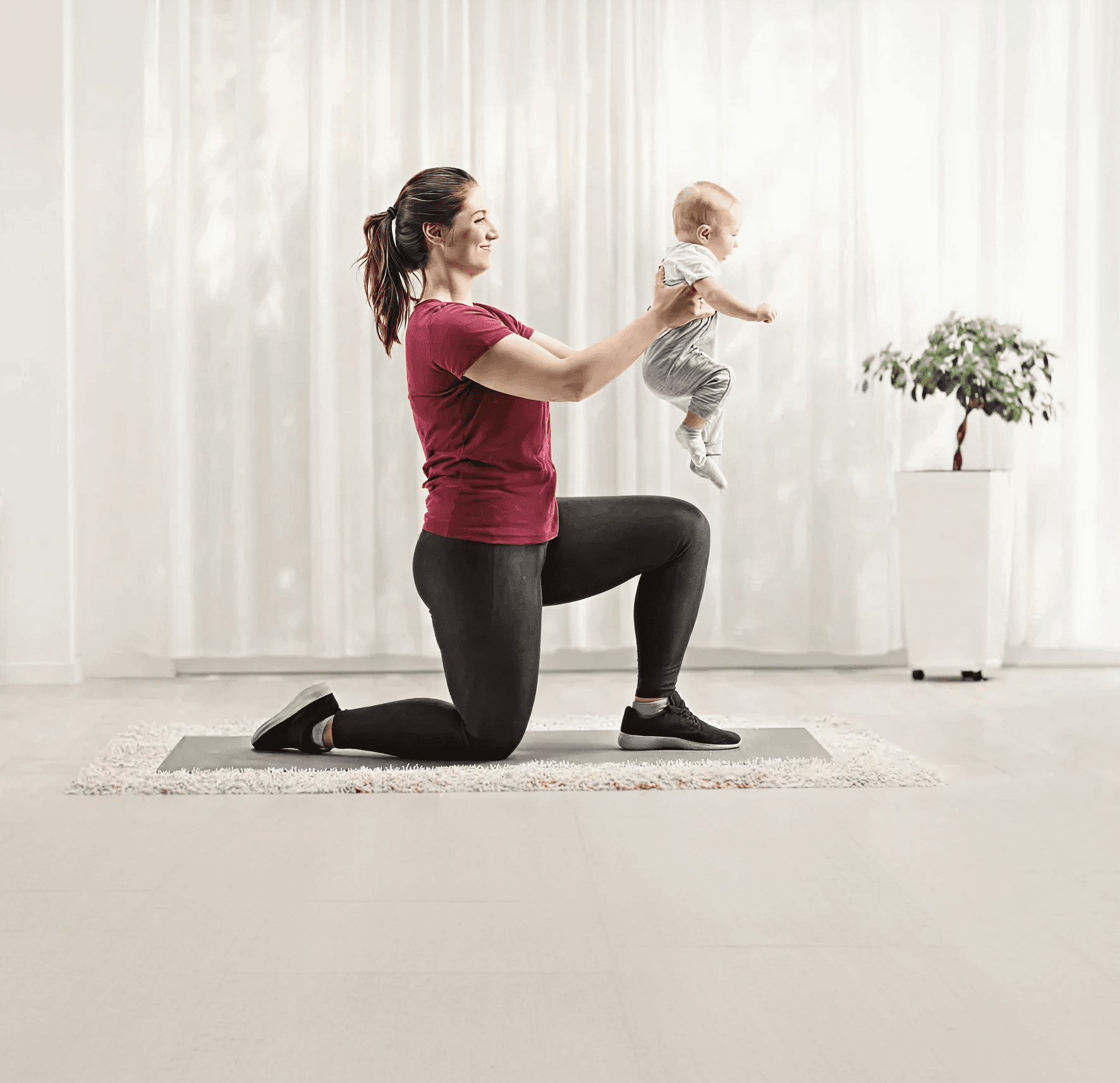
You Used to Feel Strong. Now You Are Not Sure Where That Went.
Picture this. It is 7am in Bangkok. The traffic on Sathorn is already impossible. You have packed the school bag, made breakfast, answered two work messages before your coffee got warm, and you have not even thought about yourself yet.
Somewhere between the delivery room and this morning, your body changed. Not just the way it looks, but the way it feels. You feel softer than you used to. Weaker. A little disconnected from yourself.
Maybe you have tried to fix it. You downloaded a workout app. You joined a group class for a few weeks. You went for evening walks when the Bangkok heat allowed it. But nothing really stuck, and honestly, nothing really worked either.
You are not lazy. You are not unmotivated. You are just running a system that was never properly reset after one of the most physically demanding things a human body can go through.
What Actually Happens to Your Body After Pregnancy
Most people talk about baby weight like it is just a number on a scale. But what actually changes after pregnancy is much more than that.
During pregnancy, your body goes through a series of structural shifts to make room for a growing baby. Your core muscles, especially the deep ones like the transverse abdominis, stretch and often separate. Your pelvis tilts. Your posture changes. Your hormones fluctuate dramatically, and they do not always snap back on their own timeline.
After delivery, many women experience:
Diastasis recti - a gap between the abdominal muscles that changes how your core functions
Weakened pelvic floor - leading to lower back pain or leaking when you sneeze or jump
Reduced hip and glute strength - which changes the way you walk, run, and carry load
Postural problems - from months of feeding, carrying, and bending over a cot
Lower energy levels - driven by broken sleep, hormonal shifts, and constant physical demand
None of this is a character flaw. It is physiology. And it means that getting your body back is not about doing more exercise. It is about doing the right exercise in the right order.
Why Generic Fitness Advice Makes Things Worse
Here is the problem with most post-pregnancy fitness content online. It assumes your body is the same as it was before. It tells you to start running again, do HIIT classes, or follow a 30-day ab challenge. These approaches ignore the structural changes your body has been through. Worse, they can actively make some issues worse.
Jumping straight into high-impact cardio with a weakened pelvic floor is not a great idea. Neither is hammering crunches when you have an unaddressed abdominal separation. And group classes, however fun they are, are not designed to check any of this before they put you through a workout.
Commercial gyms in Bangkok have the same blind spot. They give you a membership and some machines. No one assesses how your hips are moving or whether your core is ready to handle load. You just start and hope for the best.
The result? Many women feel like they have tried everything and nothing works. They blame themselves when the real issue is that the approach was wrong from the start.
Why Strength Training Is the Right Tool for This Stage of Life
Strength training, done progressively and with proper coaching, is one of the most well-researched tools for post-pregnancy recovery. Here is why it works when cardio alone does not.
It rebuilds the muscles that actually changed. Targeted strength work rebuilds the glutes, the deep core, the back, and the hips - the specific areas affected by pregnancy and childbirth.
It improves hormonal balance. Resistance training has a positive effect on insulin sensitivity and cortisol regulation - two systems often disrupted after pregnancy.
It changes body composition. When women say they want to tone up, they are describing a better ratio of muscle to fat. Cardio burns calories in the moment. Strength training changes the ratio permanently.
It builds the energy you feel you have lost. More muscle mass means a higher resting metabolic rate. Your body runs more efficiently. You feel less depleted at the end of the day.
Will I Look Bulky?
No. Women do not have the hormonal profile to build large, bulky muscle without years of very specific, high-volume training and a targeted dietary protocol. What progressive strength training produces in women is lean, firm muscle tone. It is the look of someone who is strong, not the look of someone who trains competitively.
The Problem with Starting Without a Plan
The number one mistake women make when returning to training after pregnancy is skipping the assessment phase. They feel motivated, they want results fast, and they jump straight into a program. Sometimes this works out fine. More often, it leads to a nagging pain that derails everything after three weeks, or slow progress that kills motivation by week six.
Your body has a history now. That history matters. Before you start any serious training, someone qualified needs to look at how your core is actually functioning, whether there are movement compensations from pregnancy posture, where your current strength baseline sits, and what your pelvic floor can handle at this point.
How Spectrum Approaches This Differently
At Spectrum Wellness Studio, no one starts training without going through the Spectrum Fit Baseline Assessment first. This is a two-session process designed to understand your body before building your program.
Session 1 - Personal Consultation: Your history, your goals, your lifestyle. How many hours do you work? How much sleep are you getting? What have you tried before?
Movement Screening: Mobility, core stability, movement quality. We identify any risks or gaps before loading begins.
Strength and Cardio Baseline: Tested at the level appropriate for where you are right now, not where you were three years ago.
Your Transition Roadmap: A personalised 12-week plan built around your body, your schedule, and your specific goals.
The roadmap is structured in phases. Phase one focuses on rebuilding your foundation - core stability, movement quality, and basic strength patterns. Phase two builds on that with progressive loading. Phase three is where you really start to feel like yourself again.
A Studio That Actually Feels Built for You
One thing that holds a lot of women back is the gym environment itself. The big commercial gyms in Bangkok can feel intimidating. Loud music, crowded floors, and a general atmosphere that assumes you already know what you are doing.
Spectrum is different by design. The studio is private. There are no crowds, no queue for equipment, no one watching you figure out a new movement. The number of clients training at the same time is deliberately limited so that each session gets full coaching attention.
Located near Nang Linchee and Sathorn, it is easy to reach from most parts of central Bangkok, whether you are coming from the office or dropping the kids at school nearby. The feel is calm, focused, and professional.
Your Next Step
If this article describes where you are right now, the best first move is a conversation, not a commitment.
Book your Spectrum Fit Baseline Assessment at spectrumstudio.fit. You will walk away with a clear picture of where your body is today, and a concrete 12-week plan to get it where you want it to be.
No guessing. No generic plans. Just a structured path forward, guided by coaches who understand your stage of life.
Strong at Every Stage. Your stage starts now.
Spectrum Wellness Studio, Nang Linchee / Sathorn, Bangkok. Private strength training for adults in transition. Book your Baseline Assessment at spectrumstudio.fit or connect via LINE.
Related Articles
Performance & Wellness Insights
How to Fix Your Posture After Sitting at a Desk All Day
For the Bangkok professional whose shoulders are slowly creeping toward their ears.

Will Lifting Weights Make Me Look Bulky? The Truth About Looking Toned
The question almost every woman asks before she starts. Here is what the science actually says.
How to Get Your Strength Back After Having Kids
For the woman who feels like her body belongs to someone else now.